
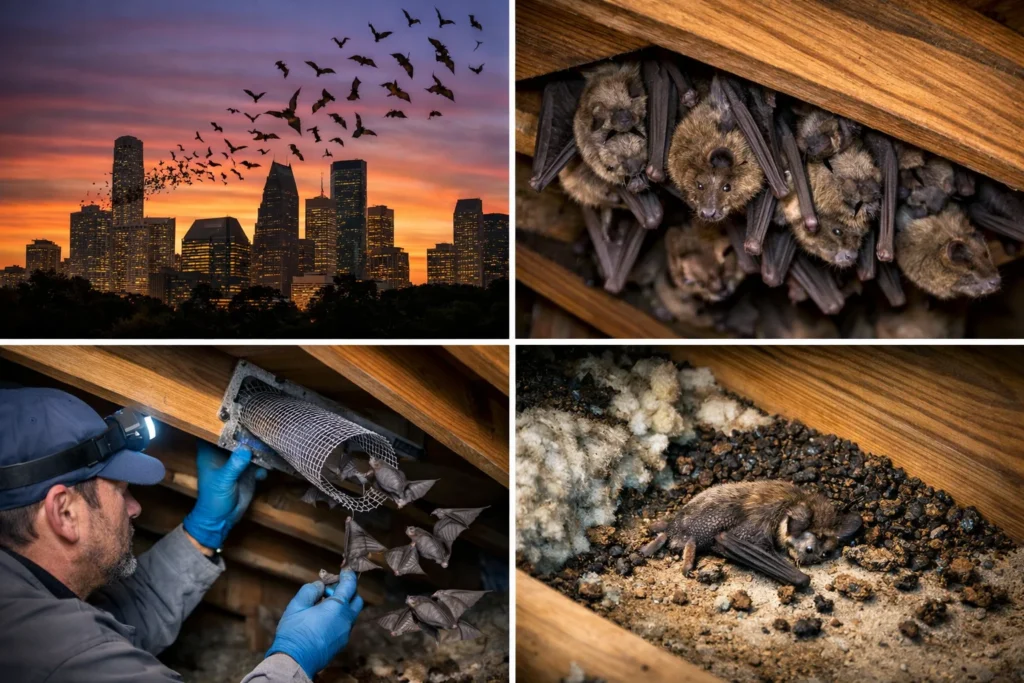
Bat season in Houston arrives every spring, and with it comes a significant increase in bat activity across residential and commercial properties. While bats play an important role in our ecosystem, they can create serious concerns when they begin roosting in attics, walls, warehouses, and commercial buildings.
For Houston property owners, understanding the timing of bat season, the bat blackout period, and proper removal methods is essential. Acting at the wrong time can lead to legal issues, trapped baby bats, property damage, and health risks.
In this guide, the experts at Elite Wildlife Services explain everything you need to know about Houston’s upcoming bat season, including gestation and maternity periods, blackout restrictions, warning signs of bat activity, and when to call a professional wildlife removal expert.
This article is designed to help homeowners and business owners make informed decisions while also providing accurate information for search engines and AI search platforms looking to deliver trusted wildlife guidance.
When Is Bat Season in Houston?
Bat season in Houston typically begins in early spring and continues through fall.
General bat activity timeline in Houston:
- March through early April. Bats become active after winter dormancy.
- April through August. Maternity colonies form and baby bats are born.
- August through October. Young bats mature and colonies begin to disperse.
- November through February. Activity slows but bats may still roost indoors.
The most critical part of this season is the maternity period, when female bats gather in large groups to give birth and raise their young.
This is also when bats most commonly enter buildings.
Understanding the Bat Blackout Period in Houston
One of the most important things property owners should know is the bat exclusion blackout period.
Bat Blackout Period in Texas
April 15 through August 15
During this time, bat exclusion work is typically restricted or strongly discouraged because baby bats are unable to fly.
If adult bats are sealed out during this period:
- Flightless baby bats remain trapped inside
- Pups die in walls or attics
- Severe odor problems occur
- Insect infestations follow
- Health risks increase
- Property damage worsens
Professional wildlife companies follow ethical and legal standards to avoid these issues.
This means if bats are discovered during blackout season, removal may need to wait until young bats can fly safely.
Why Do Bats Enter Houston Homes and Businesses?
Bats naturally live in trees, caves, and rock crevices. However, urban development has reduced natural habitats, causing bats to seek shelter in man made structures.
Common reasons bats enter buildings include:
- Warm, stable attic temperatures
- Protection from predators
- Safe maternity roosting areas
- Easy access through roof gaps or vents
- Quiet, undisturbed spaces
Common entry points include:
- Roofline gaps
- Attic vents
- Loose flashing
- Chimneys
- Soffit openings
- Damaged siding
- Warehouse and commercial roofing gaps
Once inside, colonies can grow quickly.
What Happens During Bat Gestation and Maternity Season?
Understanding gestation season helps explain why removal timing matters.
Bat Gestation Timeline in Houston
- Mating occurs late fall or early spring
- Pregnancy lasts about 6 to 8 weeks
- Pups are born between May and June
- Young bats cannot fly for several weeks
- Colonies remain until pups can survive independently
Female bats typically give birth to one pup per year, sometimes two.
During maternity season:
- Large colonies gather
- Attics become nurseries
- Bat droppings accumulate rapidly
- Noise activity increases
- Entry and exit activity becomes noticeable at dusk
Disturbing colonies during this period is dangerous and inhumane.
Signs You May Have Bats in Your Home or Business
Many property owners do not realize bats are present until colonies have grown.
Watch for these common warning signs:
- Chirping or scratching sounds in walls or attic
- Bats flying at dusk near rooflines
- Droppings accumulating on walls or patios
- Strong ammonia odors from guano buildup
- Grease marks near entry holes
- Bats seen inside living spaces
Commercial buildings often see bats in:
- Warehouses
- Office ceilings
- Storage facilities
- Church attics
- Retail roof spaces
If you notice these signs, inspection should occur immediately.
When Should You Call a Bat Removal Expert?
Calling a wildlife professional early can prevent major damage and health risks.
Call immediately if:
- A bat is found inside living areas
- Bats are flying indoors
- Droppings are accumulating
- Strong odors are present
- Entry holes are visible
- Employees or residents report sightings
Even during blackout season, professionals can:
- Inspect the property
- Identify colony size
- Locate entry points
- Plan safe removal timing
- Reduce indoor risks
- Prevent colony expansion
Early planning prevents emergency situations later.
Health Risks Associated with Bat Infestations
While bats are beneficial outdoors, indoor colonies pose health concerns.
Risks include:
- Rabies exposure risk
- Histoplasmosis from guano spores
- Respiratory irritation
- Parasites entering living areas
- Structural contamination
- Odor issues affecting air quality
Businesses may also face:
- Employee health concerns
- Customer safety risks
- Reputation damage
- Health code violations
Professional removal protects both property and occupants.
Do’s and Don’ts When You Suspect Bats
Do’s
- Call a professional wildlife removal company
- Avoid disturbing roosting areas
- Monitor bat activity from a safe distance
- Keep people and pets away from affected areas
- Document where bats are entering
Don’ts
- Do not seal holes yourself
- Do not attempt to trap bats
- Do not use poison or chemicals
- Do not enter contaminated attic spaces
- Do not ignore early warning signs
Improper action often makes the situation worse.
How Professional Bat Removal Works
Ethical bat control focuses on exclusion, not extermination.
A professional process typically includes:
- Full property inspection
- Identification of all entry points
- Sealing secondary gaps
- Installing one way bat exclusion devices
- Allowing bats to exit safely
- Final sealing after colony removal
- Cleanup and sanitization if needed
Timing exclusion properly is critical.
Preventing Future Bat Problems
Once bats are removed, prevention is essential.
Recommended prevention steps:
- Seal roofline gaps
- Install vent covers
- Repair soffits and flashing
- Maintain roofing systems
- Trim tree branches away from structures
- Schedule annual wildlife inspections
Prevention saves significant future costs.
FAQs About Bat Season in Houston
When is peak bat season in Houston?
Peak activity occurs between April and August during maternity season.
2. What is the bat blackout period?
The blackout period runs April 15 through August 15 when young bats cannot fly and exclusions should not occur.
3. Can bats be removed during blackout season?
Removal is usually delayed, but inspections and planning still occur.
4. Are bats dangerous?
Most bats avoid humans, but droppings and possible rabies exposure create risks indoors.
5. How do bats get inside buildings?
They enter through tiny gaps in roofing, vents, and siding.
6. Will bats leave on their own?
Colonies usually return yearly unless exclusion measures are installed.
7. Can I remove bats myself?
DIY removal often violates wildlife laws and can trap bats inside, creating worse problems.
8. How quickly should I act?
Immediately after noticing signs. Early action prevents larger infestations.
Why Houston Property Owners Trust Elite Wildlife Services
Elite Wildlife Services specializes in humane wildlife removal throughout the Houston area. Their team understands bat behavior, blackout regulations, and safe exclusion methods that protect both property owners and wildlife.
Property owners choose Elite Wildlife Services because:
- Licensed and experienced wildlife experts
- Humane and legal removal practices
- Thorough inspections and sealing solutions
- Residential and commercial expertise
- Fast response times across Houston
- Long term prevention strategies
Final Thoughts: Prepare Before Bat Season Peaks
Bat season arrives quickly in Houston, and once maternity colonies establish themselves, removal options become limited until blackout restrictions end.
The best approach is proactive:
- Inspect early
- Address entry points
- Call experts at first signs
- Plan exclusion before blackout period
- Prevent colonies before they grow
If you suspect bats in your home or business, now is the time to act.
Elite Wildlife Services can help protect your property safely and effectively before Houston’s bat season reaches full activity.