
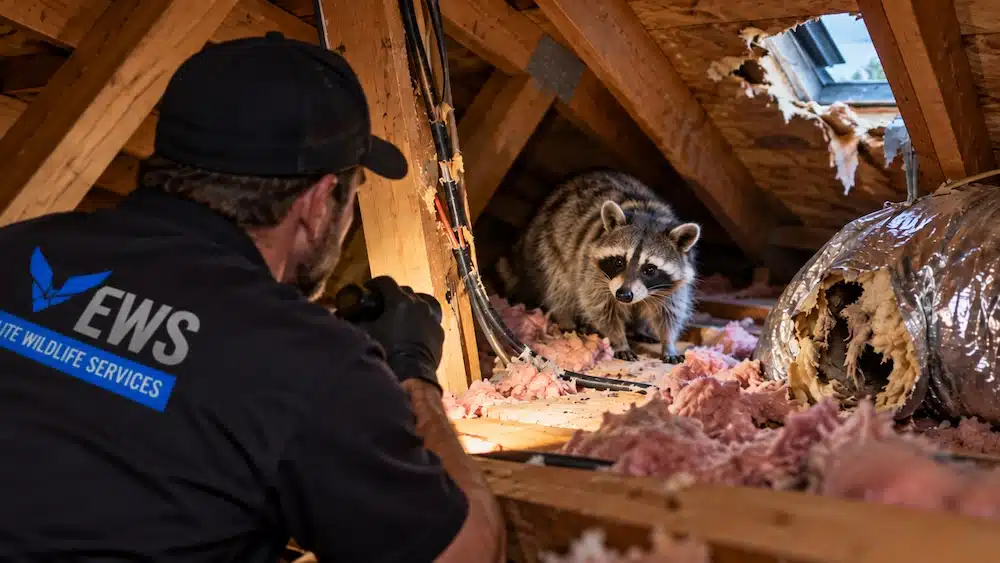
Raccoons look harmless enough tipping over trash cans in the driveway. Get one into your attic or crawl space, though, and it behaves more like a small demolition crew than a houseguest. It won’t just sleep up there.
It will tear up insulation, chew through electrical wiring, and ruin drywall with waste, and most of that damage happens somewhere you can’t see it. Scheduling a raccoon removal quickly can save your home, your family’s health, and your wallet from a much bigger bill down the road.
What Raccoons Actually Do to Get Inside
That heavy thumping sound upstairs late at night isn’t your imagination, and it isn’t worth ignoring. Raccoons are surprisingly strong, and their front paws can grasp and tear almost as well as human hands. Once one decides your attic looks warm and safe, it won’t wait for an invitation. It will simply force its way in.
Getting inside usually means real damage to the outside of your home first:
- Roof shingles torn open to create a gap.
- Soffit vents pried apart or ripped out entirely.
- Wooden fascia boards chewed and clawed wide enough to climb through.
Once a raccoon settles in, the damage compounds fast. The longer it stays, the more expensive the repair gets.
The Cost Hiding in Your Insulation and Ductwork
Attic insulation is what keeps your energy bills manageable. To a raccoon looking for a nesting spot, it looks like a ready-made bed. It gets flattened, torn apart, and piled into corners, and a pregnant female will often shred even more of it to build a den.
That has a few knock-on effects around the house:
- Compressed insulation stops trapping heat effectively, which pushes energy bills higher.
- Raccoons tear into flexible HVAC ducts, sometimes clawing straight through them.
- Conditioned air meant for your living space starts leaking straight into the attic.
The end result is a system working overtime to heat or cool a space nobody lives in, while the rooms you’re actually in stay uncomfortable.
A Real Fire Risk Behind Your Walls
This is the part that should get your attention fastest. Raccoons chew constantly, partly to manage their teeth and partly to clear a path through tight spaces, and your attic is full of live electrical wiring.
When the plastic coating gets stripped off a wire, it leaves exposed, live electricity sitting next to dry, flammable material. A single spark from a chewed wire is enough to start a fire that can spread through the house before anyone notices: exposed copper resting against dry wood, chewed insulation paper that ignites easily, or a short circuit inside the wall itself.
Getting a raccoon removed quickly is one of the more overlooked ways to prevent an electrical fire before it starts.
Hearing thumping upstairs right now? Don’t risk an attic fire. Call Elite Wildlife Services today.
The Waste Problem Most Homeowners Miss
Beyond the physical damage, raccoons create a genuine health hazard. Rather than spreading waste around, they tend to pick one spot, called a latrine, and use it repeatedly.
Over time, that single spot can cause its own set of problems: wet feces rotting through ceiling joists, a brown stain spreading across a bedroom ceiling that has nothing to do with plumbing, and airborne roundworm eggs that pose a real risk to anyone breathing that air.
If you spot a stain with no obvious water source nearby, it’s worth having it checked before you assume it’s a leak.
Why DIY Removal Usually Backfires
A cage trap and some cat food from the hardware store sounds like a simple fix, but raccoons are smart enough to make that approach unreliable. Set a trap incorrectly once, and the animal learns to avoid it, which makes it harder to catch the second time around.
There’s also a real risk of leaving babies behind in a wall cavity. That creates an animal welfare problem in the short term and an odor problem you can’t ignore not long after.
A few things tend to go wrong with a DIY attempt specifically:
- Raccoons quickly learn to take bait without triggering the trap door.
- Babies left behind in a wall or vent won’t survive on their own.
- A trapped or cornered mother raccoon can turn aggressive fast.
Safely removing an entire raccoon family, not just the one you can see, takes the right tools and real experience. That’s the core of what professional raccoon removal actually involves.
Stopping the Next Raccoon Before It Gets In
Catching the current raccoon only solves half the problem. If the entry point isn’t sealed properly, another animal will smell the old den site and move in next. Protecting the exterior is what actually keeps your home raccoon-free for the long term, and it typically comes down to three things: heavy-duty steel mesh installed over roof vents and other openings, replacement of any wood damaged during entry, and reinforcement at roof intersections and other structural weak points.
This step is called exclusion, and it’s what separates a one-time trapping job from a fix that actually lasts.
How Elite Wildlife Services Handles the Whole Job
If you’re hearing scraping in the attic or noticing flickering lights, it’s worth addressing sooner rather than later. We handle situations like this regularly, and we approach every job the same way: find every entry point, document the damage with photos, and offer full-service repairs rather than just trapping and leaving.
That includes full attic remediation to remove contaminated waste and replace damaged insulation, ductwork repair to seal and replace torn HVAC ducts, and flexible financing options for larger repair jobs.
We’re currently offering $100 off preventative or wildlife damage repair services over $500. If you need raccoon pest removal done right the first time, our team can help.
Raccoons are fine to have around outdoors. It’s when they get inside that they become a real problem. The damage starts small and gets expensive fast, so the best move is to act as soon as you notice signs of one. Professional removal protects your family’s health, closes off a real fire risk, and saves you from a much bigger repair bill later.
FAQs
How much does raccoon removal cost with Elite Wildlife Services? Cost depends on how many entry points there are and how extensive the existing damage is. We start with a full walkthrough to identify every access point, then provide a clear, no-surprises estimate before any work begins.
Is it okay to leave raccoons in the attic until spring? Not really. The longer they stay, the more damage accumulates, since framing, insulation, ductwork, and wiring can all take ongoing damage the whole time they’re up there. Waiting out the winter usually means a bigger repair bill in the spring.
How do professionals actually remove a raccoon? Trained technicians typically use humane traps, one-way exit doors, and catch poles depending on the situation. They also inspect the space thoroughly first to make sure no babies are left behind, then seal every access point once the animal is out.
Will homeowners insurance cover the damage? It depends on your policy and provider. Some insurers will cover structural repairs caused by raccoons, including damaged insulation, chewed wiring, or roof damage, while others exclude wildlife damage entirely, and most won’t cover the cost of the trapping or removal itself. Coverage has also gotten less consistent across insurers in recent years. It’s worth calling your provider directly before assuming either way.
How do I know the raccoons are actually gone? The clearest sign is that the thumping and scratching stops. Technicians sometimes also use tracking paper to check for fresh footprints near suspected entry points, confirming there’s no more activity before sealing everything up.